
Simon Pritchard, Managing Director of Specialist Driver Resourcing, explores the key traits and experience that builders’ merchants should expect when they recruit a temporary driver.
Temporary drivers are often viewed as a necessary short-term solution. A merchant’s own driver phones in sick or has a week booked off as annual leave, and an agency driver fills the gap until things return to normal. That mindset is understandable, but I think it’s also one of the reasons why temporary drivers can be undervalued.
Instead of asking, “Can this person cover today’s deliveries?”, perhaps the better question should be: “What standard should we expect from anyone who represents our business?”
In an industry where customer relationships are built over years, every delivery forms part of the customer experience. The person behind the wheel is not simply transporting materials from A to B. They are often the only face-to-face interaction a customer has with the merchant that day. Whether they arrive on a busy building site or drive to a homeowner’s driveway, their professionalism shapes perceptions of the business just as much as the products on the vehicle.
Too often, temporary driving resource is judged purely on availability. Can someone start tomorrow? Do they hold the right licence? Are they available for the next two weeks? Those questions matter, but should only be the starting point.
Drivers working within the builders’ merchant sector need a level of knowledge that extends well beyond their legal entitlement to drive a vehicle. Every day presents them with situations that require judgement, experience and an understanding of the industry’s unique demands.
Handling timber, plasterboard, insulation or heavy landscaping products is very different from delivering palletised goods to a warehouse. Drivers need to understand how products should be loaded, secured and protected, while recognising that every delivery location presents a different challenge. Residential streets, busy construction sites, schools and commercial developments all require different approaches to safety, vehicle positioning and customer interaction.
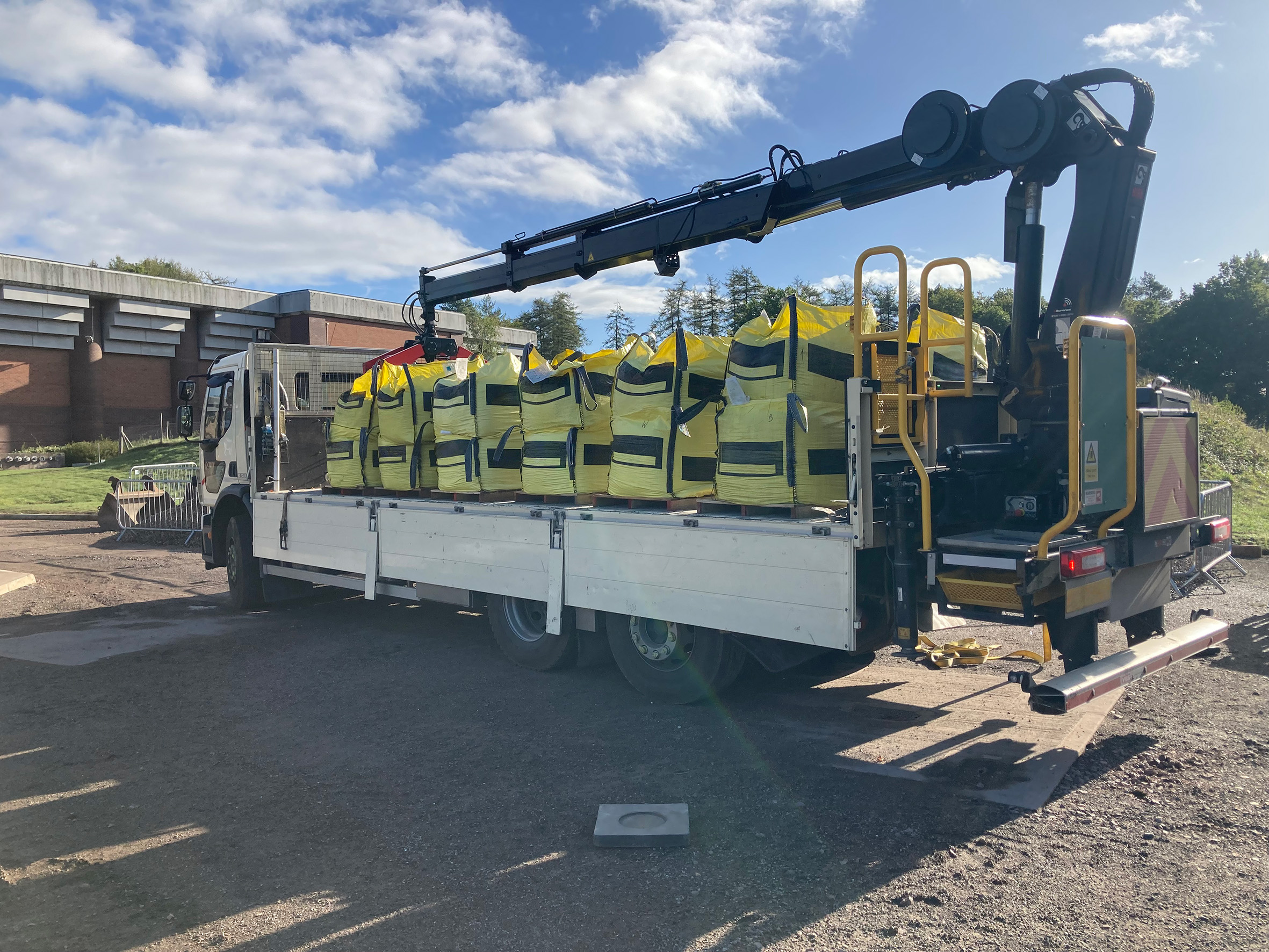
For merchants delivering with HIAB cranes or Moffett forklifts, the expectation rises again. Drivers must assess their surroundings, understand ground conditions, communicate effectively with customers and carry out deliveries without creating unnecessary risk. These are skills developed through practical experience rather than something that can be learned overnight.
Consistency is another quality that deserves greater attention. One of the hidden costs of relying on temporary labour is the disruption that can be caused when a different driver arrives every day. Branch staff spend valuable time explaining routes, delivery procedures and customer expectations, only to repeat the same conversation with someone new the following week.
The strongest temporary drivers quickly become familiar faces within the merchant branch’s team. They understand how a branch operates, know the expectations of regular customers and integrate into existing teams with minimal supervision.
They may not appear on the payroll permanently, but they behave like part of the business while they are there. That continuity benefits everyone. Branch teams spend less time firefighting, transport managers gain confidence that their delivery schedules will be met and customers receive the consistent service they expect.
Health and safety sits, rightly, at the centre of everything. Builders’ merchant drivers operate in environments where mistakes can have serious consequences. Vehicle checks, safe loading practices, compliance with transport legislation and awareness of site hazards cannot be treated as optional extras. Every temporary driver should arrive with those standards already embedded in the way they work.
Good communication separates the drivers merchants ask for again from those they don’t. The best drivers don’t simply complete deliveries; they become another set of eyes and ears for the business. They flag access issues before they become delays, report damaged materials, communicate changes to delivery schedules and work closely with yard teams and transport planners to keep operations running smoothly.
One change we’ve seen over the last few years is that temporary drivers are no longer just there to plug occasional gaps. Many merchants now rely on temporary resource as a planned part of their operation, which makes the quality of your temporary driver provider more important than ever.
Merchants should never feel they have to lower their expectations because a driver is temporary. Professionalism, specialist knowledge, strong communication, safe working practices and excellent customer service should be the baseline, not the aspiration. When temporary drivers consistently deliver those qualities, they stop being viewed as cover for an absence and start becoming a genuine extension of the merchant’s team.
That’s exactly the standard we’ve built Specialist Driver Resourcing around. We employ our drivers directly, invest in their ongoing training and work exclusively within the builders’ merchant and construction supply sector, giving our clients experienced professionals who are ready to contribute from day one.
If you’d like to discuss how Specialist Driver Resourcing can support your branch or transport operation with experienced HIAB, Moffett and Class 2 drivers, visit www.specialistdrivers.com or get in touch with the team to find out more.